Exploring Slow, Continuous Improvements: Soul Sculpting Project
What needs improving ?
I need better physical health specifically, I need to move my body more.
What small movement could I do to increase my movement?
I could go to the gym every day.
Too big, ask again. What smaller movement could I do to increase my movement?
Park at the far end of the parking lot when I go to work every day.
Still too big, ask again. What ridiculously small movement could I do to increase my movement?
Park one space over from my usual parking spot this week.
Okay, that sounds insignificant, but I’ll do it.
Next Week
Does this new parking spot feel completely effortless?
Yes, I don’t even notice the difference.
Great. This week park one space further yet.

This is Kaizen. Does it work to create any real change? Over time, yes.
I tend to like the “quick fix’. Sweeping, vast, changes that make everything right.
The problem: The quick fix with vast change doesn’t always work.
Kaizen is not the ‘quick fix’. It is the ‘slow continuous improvement fix’.
Born in America and raised in Japan, Kaizen means “good change”. It is a method used by businesses and individuals to make positive change by making very, very small changes. The changes are tiny, seemingly insignificant, but because they are in a system of continuous change the insignificant can birth significant improvement.
Individuals use Kaizen to lose weight, heal relationships, exercise, improve mental health . . . . Businesses use Kaizen to increase product quality, sell more products, boost morale, cut costs, develop new products. . . .
Kaizen is about “good change”.
Why does Kaizen work?
Think of making a change and our mind automatically turns on an alarm system. “Change could be dangerous. Watch out!” Our mind is doing it’s best to keep us safe and continuing just the way we are. The problem: ‘Just the way we are’ is not always good.
Kaizen makes changes so tiny that our mind fails to turn on the alarm. With the alarm system quiet we are able to move forward with our mind free for creative, intelligent focus.
Deciding to go to the gym turns on an alarm system in many of us, parking one space over does not. As we move over one space, week by week, we get a tiny bit of exercise, our brain begins to form new ways to relate to movement, and we create a new identity as a person who moves grows.
Do these ridiculously small changes actually make a difference?
According to Toyota, Nestle and Canon and many other businesses the answer is,”yes”.
According to psychologists and counselors like Dr. Robert Maurer, the answer is, “yes”.
Because Kaizen has a good track record I am choosing to give it a try. I invite you to join me.

Soul Sculpting Project: Exploring Slow, Continuous Improvements
- Invite God’s wise, loving company.
2. Think of something you want to improve.
3. Ask
What small thing could I do to improve this?
4. Ask
What smaller thing could I do to improve this?
5. Now Ask
What ridiculously small thing could I do to improve this?
Now you have it. Choose the ridiculously small action and in a few days or weeks ask:
6. Is this step automatic and effortless?
- If the answer is “Yes, then add the next ridiculously small step.
- If the answer is “No”, then continue as is or choose an even smaller step.
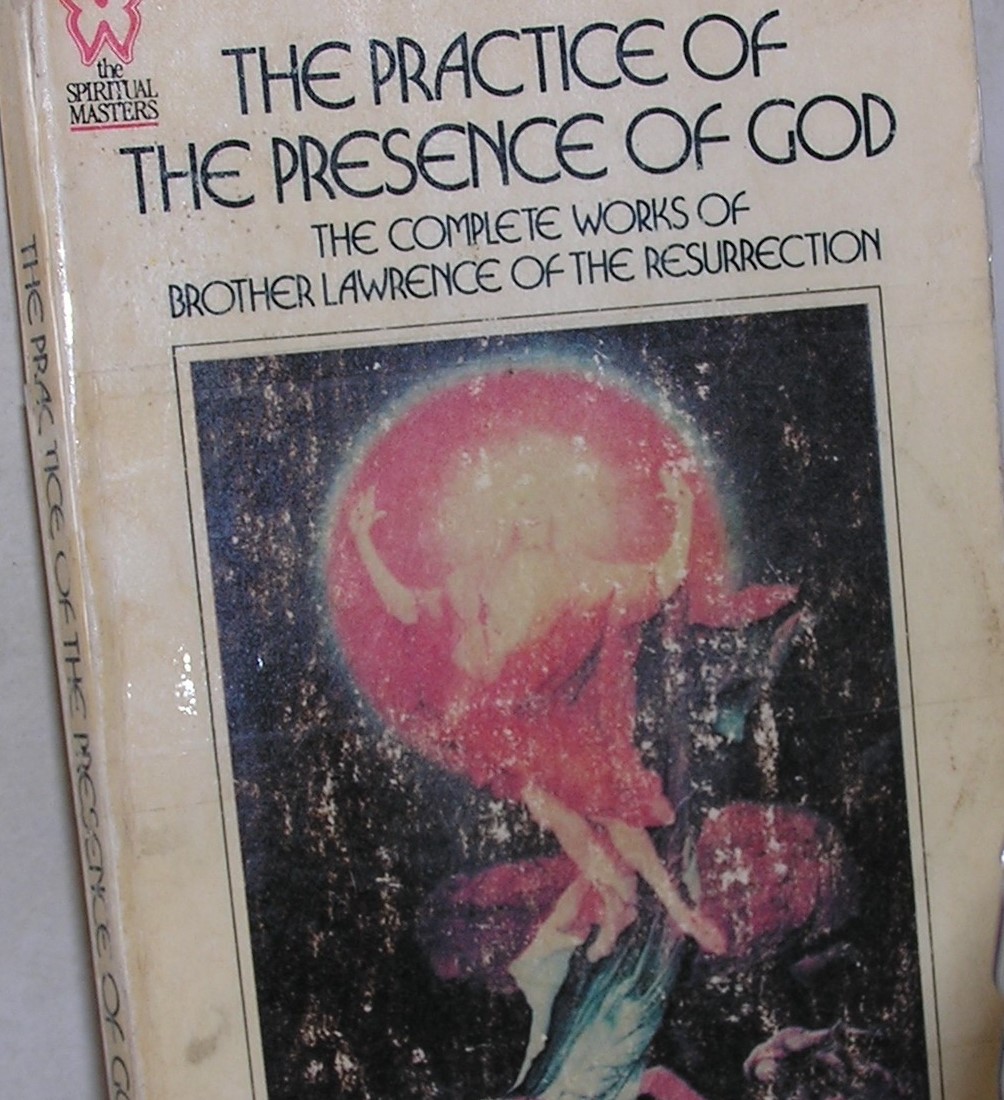
When a French kitchen worker wanted to live constantly in God’s presence he began with one tiny Kaizen step: An inward glance to God as he began a new cooking task. This glance felt like a gentle, easy action. Over time he increased the frequency of the glances and eventually could say,
 “The time of action does not differ at all from prayer: I possess God as tranquilly in the bustle of the kitchen, where sometimes several people are asking me different things at one time, as if I were on my knees before the Blessed Sacrament.
Brother Lawrence
Lawrence did not experience the formation of this new habit to be entirely easy. He frequently forgot to glance and persistence was required to keep at it. Lawrence was adamant that this persistence should be performed with self-kindness. Don’t beat yourself-up when you fail, just gently begin again.
I am expecting that Kaizen will require persistence and self-kindness from me as well. But I am up for the experiment. I hope you will join me.
Gratitude to Robert Maurer
For more: The Spirit of Kaizen: Creating Lasting Excellence One Small Step at a Time
 soulsculpting
I am adding Kaizen to my vocabulary list. Thank you Cheri; good stuff!
Thanks for putting this to use.