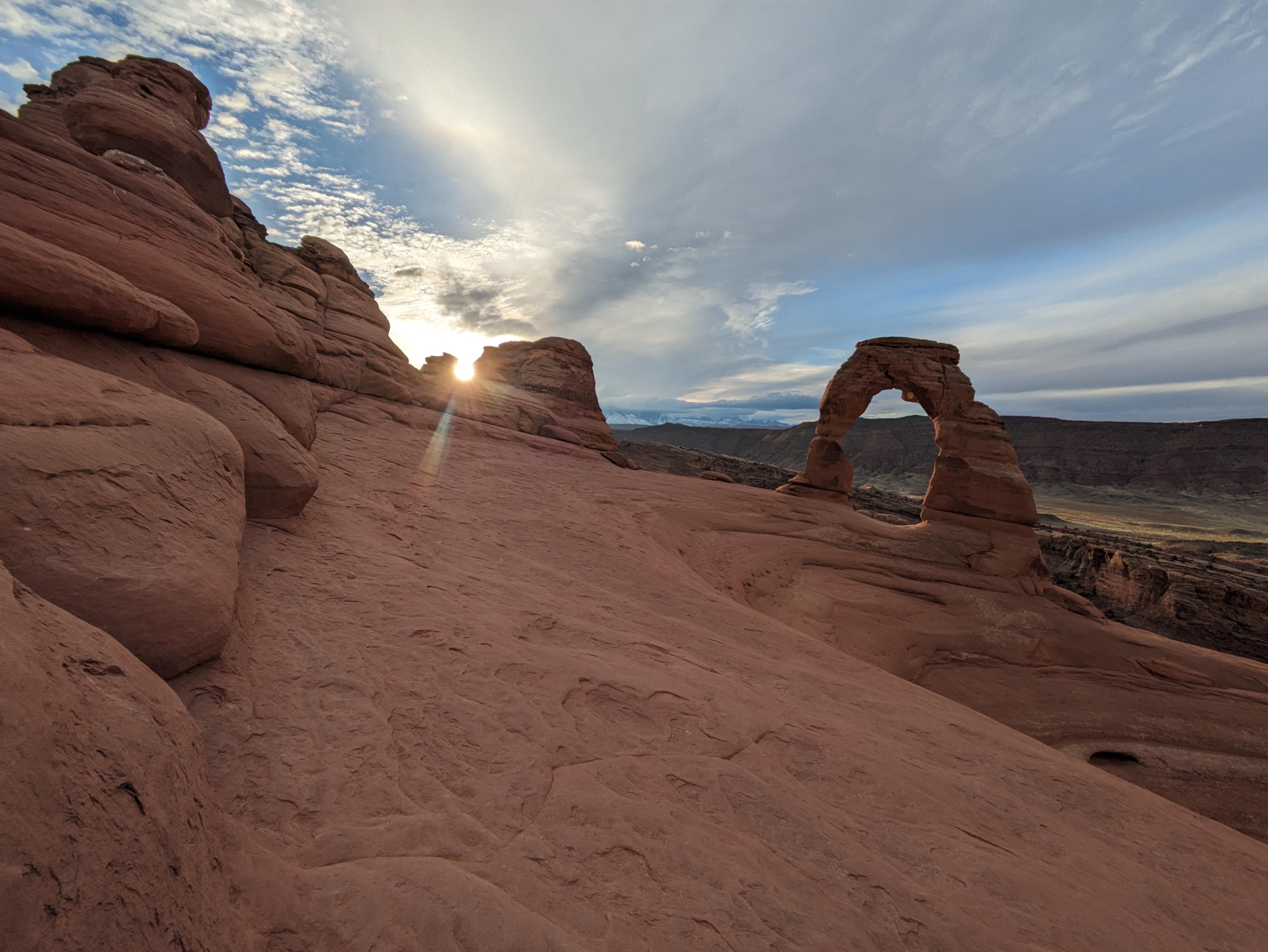
I remember a morning sitting near Delicate Arch in Utah, attempting to capture it on paper with watercolor. A young teen girl walked by me and asked in wonder, “Are you a real artist?!”
“Yes,” I said, “just like you.” – She smiled.
I am under the opinion that all of us are real artists. The act of creating art seems – to me – to be a fundamental part of being a human being.
Though I am a real artist, I don’t consider myself a skilled artist.
I learned to watercolor from my grandmother, who used watercolor to create a few paintings, cards for friends, and one amazing local wild-flower book. When she was in her mid-60s, my parents bought her a set of oil paints and that launched a new era of art for her. She entered her paintings in the county fair, she painted for all of the family members, and then there was the Great Art Heist.
When our remote family cabin was broken into, the thieves bagged many items to remove, but apparently they had to leave in great haste because they left all of the bagged items, and the only item that turned up missing was one of my grandmother’s oil paintings. I always thought she should have considered it a great honor that her painting was the one treasured item they grabbed in the rush.
I paint for two reasons. The first is to create gifts or cards and second is to pay attention. When I’m at places like the Delicate Arch, I find that I see so much more if I paint the scene. When I stop and look and paint – I see the world in a new way.
I also enjoy the freedom of play and discovery that I have with watercolor. Occasionally a watercolor comes out in a satisfying form. But there are many times when the end product is quite disappointing. When I create a failure, it opens the fun of discovery. Since it can’t get any worse, I begin to experiment. – Who knew that throwing water all over a watercolor could actually blur and enhance the whole effect.
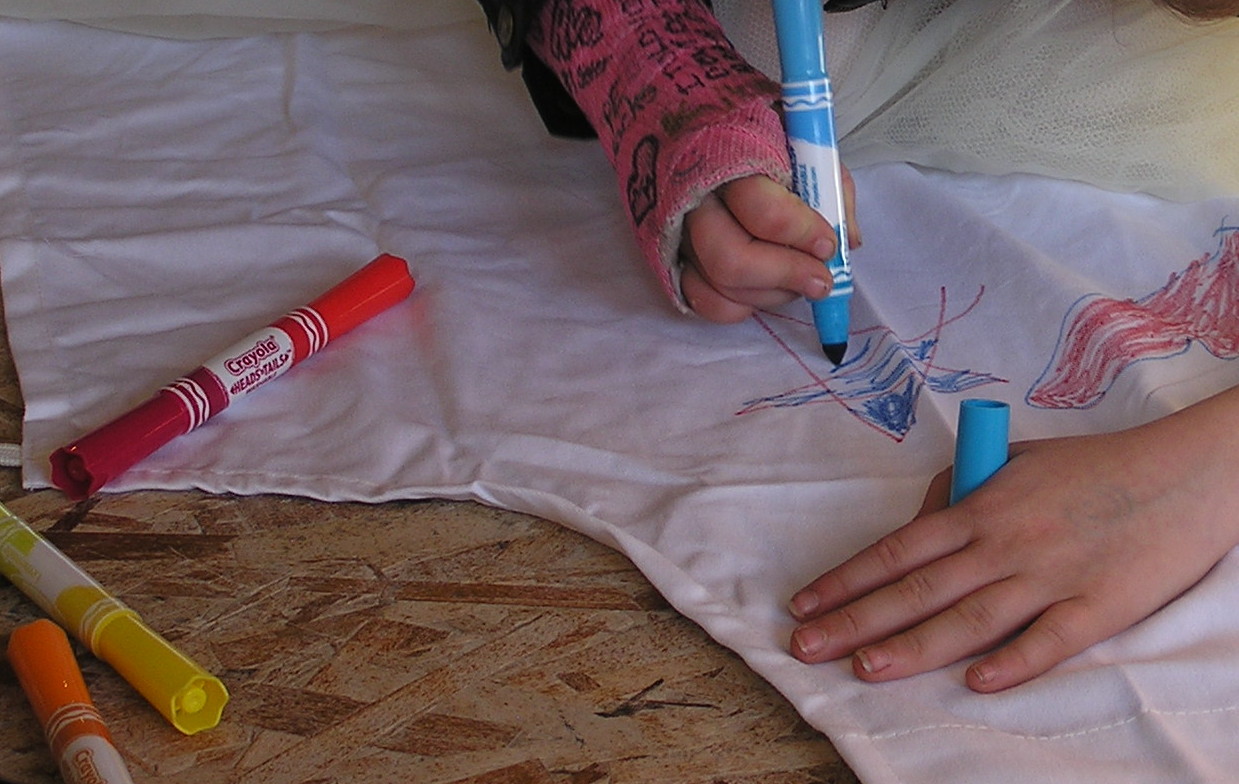
Creating art comes with a lot of stigma for many of us. According to Brene’ Brown, childhood art class is one of the main contributors to childhood shame stories.
When I bring arts and crafts supplies to a small group gathering, one of the most common statements I hear is – “I’m just not creative.”
What if creating art is not purely about the ideal product at the end?
What if the process of creating art is even more important than the product?
What if the process of creating art is more important than the end product?
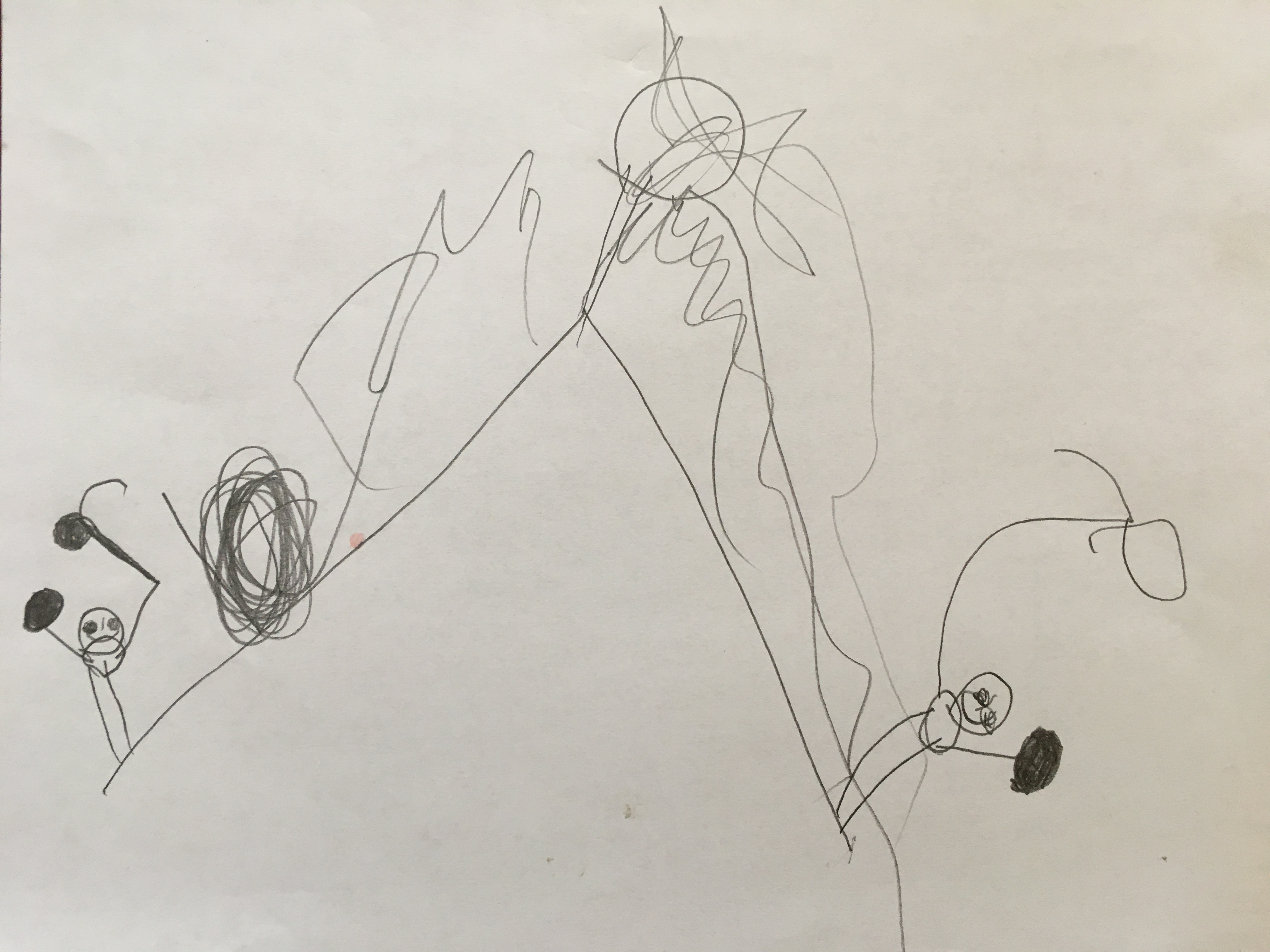
Designed to be Creative
It seems to me that we’re designed to be creative. When we choose to create art we experience significant benefits for our mental and physical health.
We don’t have to be skilled or even create something beautiful to experience the benefits of this process.
The process of creating art is a type of therapy for our mental well-being.
- Art therapy has successfully helped people who struggle with anxiety, PTSD, bi-polar disorder, addictions, dementia, and depression.
- Creating art lowers physical pain and elevates our mood.
Creating art is a work-out for our brain
- Improving our brain plasticity
- Expanding our creative thinking skills
- Promoting communication between different parts of our brain
- Enhancing our memory capacity
Just a little craft project?
A 2017 Mayo Clinic study discovered that people over 70 who did crafts projects lowered their risk of developing mild cognitive impairment. A PLOS report found that people who take on craft-based projects in midlife and older have a 45 percent less chance of developing cognitive issues such as dementia.
Our body systems also experience the benefits of creating art.
For example, a study examining the effects of creative writing on HIV patients discovered that the process of writing impacted the cells inside the patient’s body and improved their immune system.
Creating art can promote positive physical changes inside our body.
I think we are designed to be creative.
There are many ways for us to create art.
- Visual arts, written arts, dance, music, culinary arts, theater, crafts of all kinds. . .
All these forms of creativity can have the mental and physical benefits of the process of creating.
I enjoy playing with many forms of art. I am not highly skilled at any of them, but for me that’s not the point. The point is the play. Playing with the process of creating.
Soul Sculpting Project: The Process of Ordinary Art
- Invite the company of the Creator.
- Ask: “What art form would I like to play with?”
- Ask: “What is the first step I could take to begin the process?”
In the Beginning God Created . . . Genesis 1
Gratitude for the many researchers who study the topic of health and art.
 soulsculpting