#7 of Seven Ancient Christian Practices for Connecting with God
Soul Sculpting Project: Imagining Stories to Connect with God
Pilgrimage Jerusalem 384 AD
Egeria knew the story well. On this Holy Week in this holy city she heard the story read again and she re-lived it.
Egeria sat in a cave where Jesus had met with his followers and listened to the stories Jesus told. Egeria sat with a crowd in the main church and cried as she heard the story of Judas’s betrayal. She sat in a ‘graceful’ chapel on the Mount of Olives and heard Jesus warn Peter, “Watch and pray so that you will not fall into temptation. The spirit is willing, but the flesh is weak.”
In the dark hours of the night Egeria accompanied a large crowd, all carrying candles, as they descended the steep trail down the Mount of Olives to a place where they heard the story of Jesus’s arrest. At the end of this reading Egeria says, “ everyone was groaning and lamenting and weeping so loud that people even across Jerusalem could probably hear it all.”
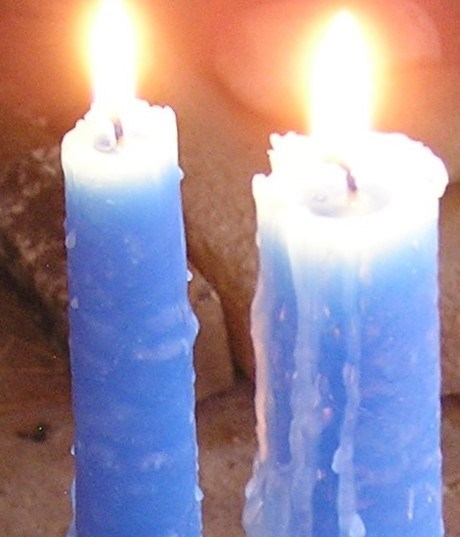
Imagining Stories
Stories invite us to re-live and to feel.
With stories we use our brain’s God-given skill of imagination to deepen our connection with God.
It’s the stories that we tell ourselves all day that are a primary tool we use to create our emotions.
This week I invite you to join me in Egeria’s ancient practice of reliving moments in the last few days of Jesus’s life and the first days of his life after death.
Soul Sculpting Project: Imagining Stories to Connect with God
Two ways to choose from:
- Listen to a guided imagination of the stories.
And /or
- Read the stories for yourself.
First way: Listen to Guided Imaginations
Tip: Turn OFF the recording sound when the meditation ends or SoundCloud will provide music that may not fit the moment of meditation 🙂 .
Second way: Stories to read and imagine for yourself
This set of stories is from the account of those amazing days as seen through the eyes of John,, one of Jesus’s closest friends.
Story for Thursday
John 13: 1-11
1 It was just before the Passover Festival. Jesus knew that the hour had come for him to leave this world and go to the Father. Having loved his own who were in the world, he loved them to the end. The evening meal was in progress, and the devil had already prompted Judas, the son of Simon Iscariot, to betray Jesus.
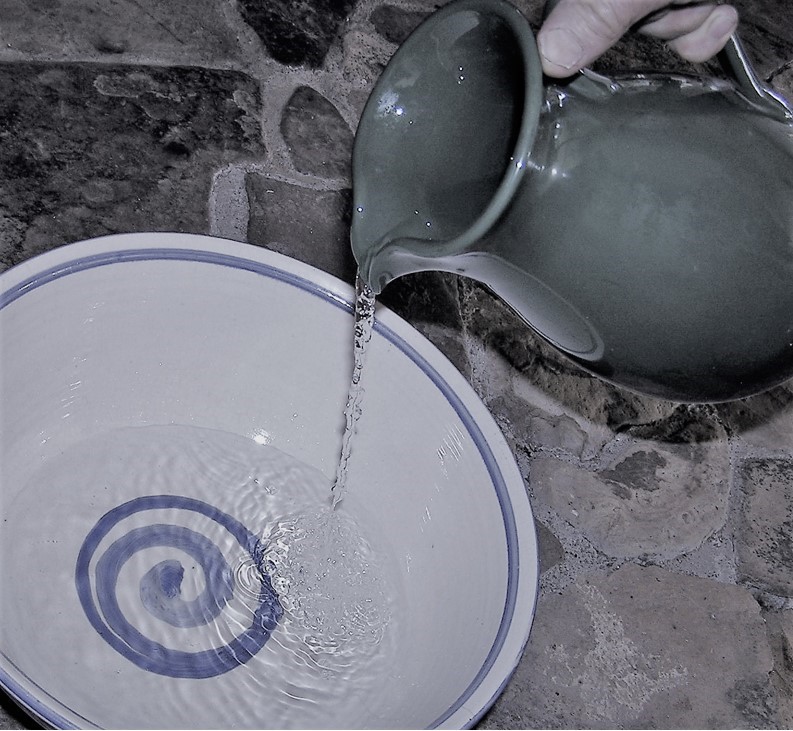
Jesus knew that the Father had put all things under his power, and that he had come from God and was returning to God; so he got up from the meal, took off his outer clothing, and wrapped a towel around his waist. After that, he poured water into a basin and began to wash his disciples’ feet, drying them with the towel that was wrapped around him.
6 He came to Simon Peter, who said to him, “Lord, are you going to wash my feet?”
7 Jesus replied, “You do not realize now what I am doing, but later you will understand.”
8 “No,” said Peter, “you shall never wash my feet.”
Jesus answered, “Unless I wash you, you have no part with me.”
9 “Then, Lord,” Simon Peter replied, “not just my feet but my hands and my head as well!”
10 Jesus answered, “Those who have had a bath need only to wash their feet; their whole body is clean. And you are clean, though not every one of you.” For he knew who was going to betray him, and that was why he said not everyone was clean.
12 When he had finished washing their feet, he put on his clothes and returned to his place. “Do you understand what I have done for you?” he asked them. “You call me ‘Teacher’ and ‘Lord,’ and rightly so, for that is what I am. Now that I, your Lord and Teacher, have washed your feet, you also should wash one another’s feet.
I have set you an example that you should do as I have done for you. Very truly I tell you, no servant is greater than his master, nor is a messenger greater than the one who sent him. Now that you know these things, you will be blessed if you do them.”
Story for Good Friday
John 19:16-30
16 Finally Pilate handed him over to them to be crucified. So the soldiers took charge of Jesus. Carrying his own cross, he went out to the place of the Skull (which in Aramaic is called Golgotha). There they crucified him, and with him two others—one on each side and Jesus in the middle.
19 Pilate had a notice prepared and fastened to the cross. It read: Jesus of Nazareth, the king of the Jews. Many of the Jews read this sign, for the place where Jesus was crucified was near the city, and the sign was written in Aramaic, Latin and Greek. The chief priests of the Jews protested to Pilate, “Do not write ‘The King of the Jews,’ but that this man claimed to be king of the Jews.”
Pilate answered, “What I have written, I have written.”
When the soldiers crucified Jesus, they took his clothes, dividing them into four shares, one for each of them, with the undergarment remaining. This garment was seamless, woven in one piece from top to bottom.
“Let’s not tear it,” they said to one another. “Let’s decide by lot who will get it.”
This happened that the scripture might be fulfilled that said,
“They divided my clothes among them and cast lots for my garment.”
So this is what the soldiers did.
25 Near the cross of Jesus stood his mother, his mother’s sister, Mary the wife of Clopas, and Mary Magdalene. When Jesus saw his mother there, and the disciple whom he loved standing nearby, he said to her, “Woman, here is your son,” and to the disciple, “Here is your mother.” From that time on, this disciple took her into his home.
28 Later, knowing that everything had now been finished, and so that Scripture would be fulfilled, Jesus said, “I am thirsty.” A jar of wine vinegar was there, so they soaked a sponge in it, put the sponge on a stalk of the hyssop plant, and lifted it to Jesus’ lips. When he had received the drink, Jesus said, “It is finished.” With that, he bowed his head and gave up his spirit.
31 Now it was the day of Preparation, and the next day was to be a special Sabbath. Because the Jewish leaders did not want the bodies left on the crosses during the Sabbath, they asked Pilate to have the legs broken and the bodies taken down. The soldiers therefore came and broke the legs of the first man who had been crucified with Jesus, and then those of the other.
But when they came to Jesus and found that he was already dead, they did not break his legs. Instead, one of the soldiers pierced Jesus’ side with a spear, bringing a sudden flow of blood and water. The man who saw it has given testimony, and his testimony is true. He knows that he tells the truth, and he testifies so that you also may believe. These things happened so that the scripture would be fulfilled: “Not one of his bones will be broken,” and, as another scripture says, “They will look on the one they have pierced.”
Story for Easter Sunday

John 20:1-18
Early on the first day of the week, while it was still dark, Mary Magdalene went to the tomb and saw that the stone had been removed from the entrance. So she came running to Simon Peter and the other disciple, the one Jesus loved, and said, “They have taken the Lord out of the tomb, and we don’t know where they have put him!”
3 So Peter and the other disciple started for the tomb. Both were running, but the other disciple outran Peter and reached the tomb first. He bent over and looked in at the strips of linen lying there but did not go in. Then Simon Peter came along behind him and went straight into the tomb. He saw the strips of linen lying there, as well as the cloth that had been wrapped around Jesus’ head. The cloth was still lying in its place, separate from the linen.
Finally the other disciple, who had reached the tomb first, also went inside. He saw and believed. (They still did not understand from Scripture that Jesus had to rise from the dead.) 10 Then the disciples went back to where they were staying.
11 Now Mary stood outside the tomb crying. As she wept, she bent over to look into the tomb and saw two angels in white, seated where Jesus’ body had been, one at the head and the other at the foot.
13 They asked her, “Woman, why are you crying?”
“They have taken my Lord away,” she said, “and I don’t know where they have put him.” At this, she turned around and saw Jesus standing there, but she did not realize that it was Jesus.
15 He asked her, “Woman, why are you crying? Who is it you are looking for?”
Thinking he was the gardener, she said, “Sir, if you have carried him away, tell me where you have put him, and I will get him.”
16 Jesus said to her, “Mary.”
She turned toward him and cried out in Aramaic, “Rabboni!” (which means “Teacher”).
17 Jesus said, “Do not hold on to me, for I have not yet ascended to the Father. Go instead to my brothers and tell them, ‘I am ascending to my Father and your Father, to my God and your God.’”
18 Mary Magdalene went to the disciples with the news: “I have seen the Lord!” And she told them that he had said these things to her.
Gratitude to bible gateway.com for the NIV Scriptures
Egeria attended a marathon of interesting worship services in Holy Week 384 AD. You can read about them and her epic pilgrimage in Egeria’s Travels John Wilkinson translator.
 soulsculpting