Soul Sculpting Project: Called to Forgive. But How? Part 2 The Work of Forgiveness
Dr. Everett Worthington had become an expert on forgiveness. He had conducted numerous research studies and had developed successful methods for helping others reach forgiveness. Like all of us, Worthington had experienced many opportunities to forgive others. But nothing of this magnitude.
On January 1 of 1996 Worthington discovered that his 76 year-old mother had been brutally murdered in her home.
Worthington put his own researcher methods to practice and within a month was able to forgive the young man who had committed the murder.
How is it possible that Worthington achieved forgiveness so quickly?
- Forgiveness is a skill that we can learn. Worthington had put in the work to learn this skill.
Does this forgiveness mean that the young man did not go prison?
- No. Forgiveness is not a legal transaction that releases the offender from the consequences of an action. Forgiveness is a personal transaction of release.
Does this mean that Worthington dismissed the event as insignificant or forgot it ever happened?
- Certainly not. In fact, his process of forgiveness included remembering the tragedy and it’s profound significance to Worthington.
So what does forgiveness mean for Worthington?
- It means he was able to let go of anger and other negative emotions, even though they were very reasonable emotions. And replace them with positive emotions, thoughts, and behaviors towards the offender.
What are the steps for the process of forgiveness?
For this Soul Sculpting Project we will be using Dr. Robert Enright’s four step model.
Step #1 The Uncovering
- We recall/remember as objectively as possible the hurt that was done.
- We recount to God the offense and how it has impacted us.
Step #2 The Decision
- We recall the the definitions of what forgiveness is and what it is not.
- We remind our self why it is important to forgive.
- We make the decision that we intend to forgive of the offender.
Steps 1 and 2 are covered in the Soul Sculpting Project: Called to Forgive. But How?
For today’s project we will move to Step 3: The Work of Forgiveness.
Why do we need to move beyond the decision step?
Because research has found that to reach the benefits of forgiveness we must move beyond an intellectual decision and engage our emotions. In full forgiveness we realign our emotions and it’s this realignment that makes the significant difference for us.
A large number of research studies have concluded that stepping into this fuller level of forgiveness is highly beneficial for our psychological and physical health.
Meaning, of course, when we choose to hold on to unforgiveness we suffer harm in our mind and body.
Employing the skill of empathy.

In Enright’s Step 3 we will:
- Step into the offender’s shoes.
- Re-frame the offense.
- Expand our story of the situation.
New stories help us create new emotions. New stories help us release negative emotions such as anger, and replace them with positive emotions toward the offender.
In the process of step 3 it is helpful to keep in mind that forgiveness is not:
- condoning the offense.
- deciding to place yourself back in an abusive situation.
Forgiveness is :
- releasing negative emotions, thoughts, and behaviors and replacing them with positive emotions, thoughts and behaviors towards an offender.
To let go of our right to be angry can be challenging. To allow our self to form new positive emotions towards an offender can be even more challenging.
Our stories are powerful. We use them to design our emotions. So considering new stories will be a power tool for us as we work with the challenges of realigning our emotions.
We are not alone in this work of forgiveness. Forgiveness matters to God and we can call on God to walk with us step by step through this difficult work. Jesus knew the difficult work of forgiveness.
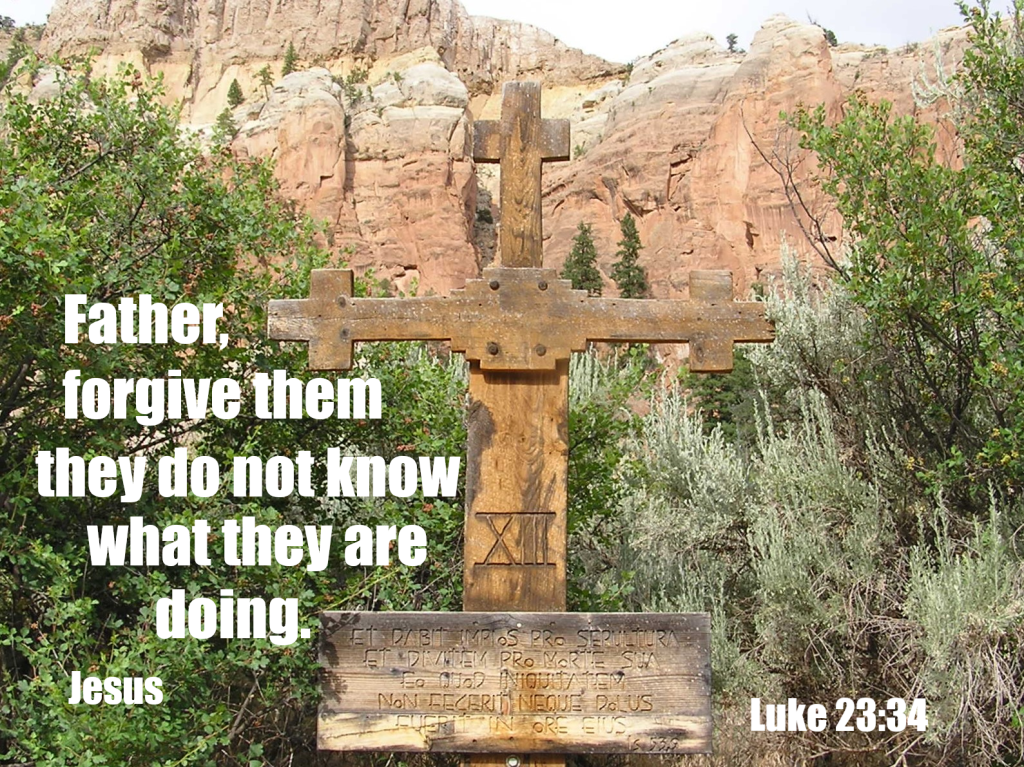
As Jesus was being led from his trial to the place where they crucified Him He was saying, “Father, forgive them for they do not know what they are doing.” (Luke 23:34)
Soul Sculpting Project: The Work of Forgiveness
- Invite the company of God.
- Using the skill of empathy step into the shoes of your offender. Imagine their story. Re-frame the offense.
- Become willing to let go of resentment and allow positive emotions towards your offender.
When Everett Worthington forgave his mother’s murderer some people challenged him asking if this forgiveness was dishonoring to his mother?
Worthington replied, “Mama taught us to forgive. It would dishonor her if we didn’t forgive.”
Gratitude for the work of: Everett L. Worthington, Jr., licensed clinical psychologist and now retired Professor of Psychology at Virginia Commonwealth University.
 soulsculpting
One Comment Add yours