WWII France: Anthony was walking down the last steps of the Underground Metro when he felt a hand on his shoulder and heard, “Stop, give me your papers.” At that moment Anthony began to experience the present moment in vivid color and intensity.
His real past disappeared. Anthony was in the resistance movement and his real past would get him shot. So Anthony prepared to take on a false past that never existed.
Then he discovered something about the future he had not known before. The future only exists if we can foresee it a minute before it happens. We have no future if we have no clue what it might be.
Anthony felt pressed into the present moment, with no past and no future.
Anthony’s false past eventually enabled him to escape. He left this event with a new understanding of the experience of the present moment.
Orthodox Archbishop Anthony Bloom continued to explore his discovery of the present moment.
He concluded that:
1. Establishing ourselves in this present moment is foundational to our connection with God.
And
2. Most of us barely know the present moment exists.
Since, fortunately, most of us do not have his unique opportunity to discover the vivid present, Archbishop Anthony developed some exercises for “stopping time and standing in the present”. 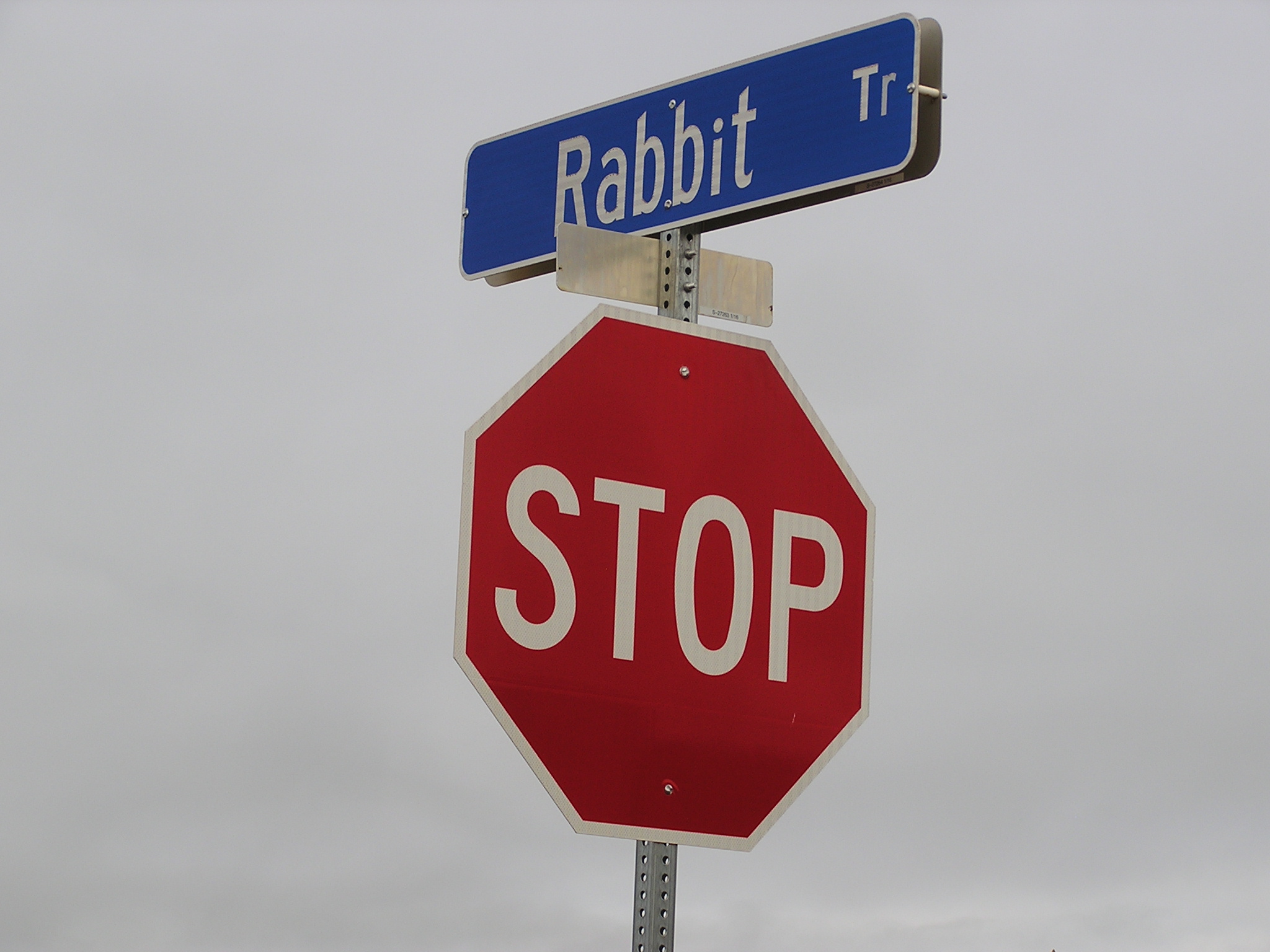
Anthony Bloom’s Time Stopping Exercise
- Pick a time when not much is happening for the next 3-5 minutes.
- Sit down, doing nothing, and say, “Here I am in the presence of God, in my own presence and in the presence of this place around me, just still, moving nowhere.”
Is this hard to do? Give it a 1 minute try right now and see.
Many of us can barely stand it for even this brief amount of time, but –
Archbishop Anthony assures us that if we do this exercise enough we will train ourselves “not to fidget inwardly, but become calm, happy, and stable”.
My experience is that he is right. At first I could barely go 3 seconds before my mind was off somewhere. Then I made it to 5 seconds. Then 30 seconds!
Mind Wandering
Our minds are awesome. They wander to the past and they wander to an imagined future. They can wander to the unimaginable. These are fantastic skills.
Our brains are so good at this we spend about 47% of our day mind wandering.
So what is the problem with that?
According to Matt Killington’s research all this mind wandering is making us unhappy.
While doing his doctoral work at Harvard, Killington set up an app for the iPhone to Track Your Happiness. It was a big study with 650,000 reports, 15,000 people, ages 18-80, 80 countries, 86 types of jobs.
If you were in this study you would be going through your day when you would get a call that asked about your level of happiness,what you were doing, if your mind was wandering, . . .
Killington analyzed the data and made some interesting discoveries.
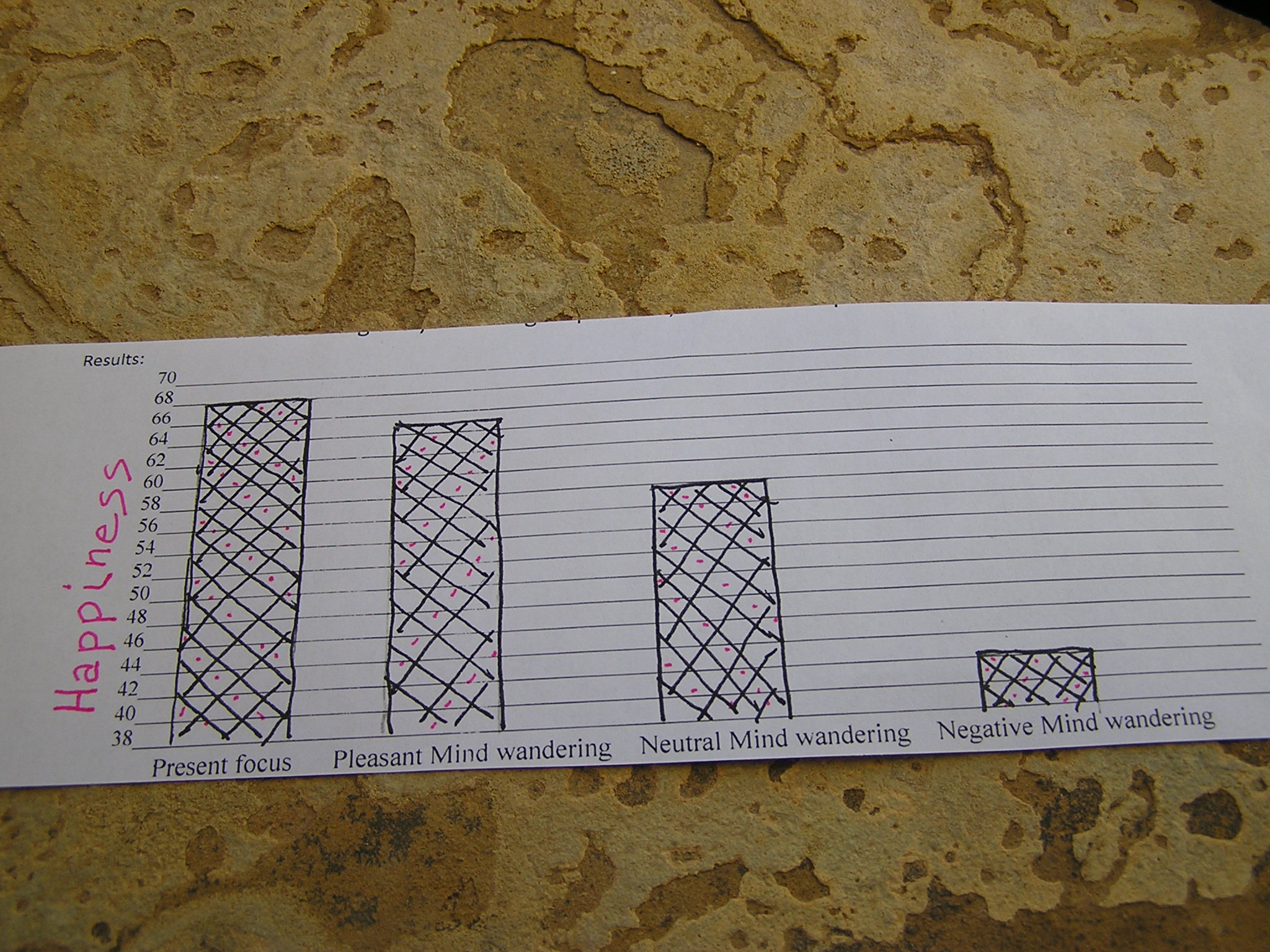
Study Conclusions:
- We are happier when our mind is on our present task than when it is wandering
- Further analysis determined that the mind wandering was the cause of the greater unhappiness.
- Even when we are doing something unpleasant – like inching along in commuter traffic – we are still slightly happier if we are focused on the present moment.
My first logic problem:
- If we are happier when our mind is on our present task than when it is wandering.
- If the average rate of mind wandering at work is 50%.
- If “There is nothing better for a person than that they . . . find enjoyment in their tasks.” Ecclesiastes 2:24
- Then?
- Then I think I will work on increasing my skill of keeping my mind in the present moment more often.
My second logic problem:
- If connection with God is valuable to me
- If Anthony Bloom is right in saying that the present moment is where I encounter God.
- Then I think I will work on increasing my skill of keeping my mind in the present moment more often.
Soul Sculpting Project: Time Stopping
- S- Stop what I am doing
- T- Take a breath
- O- Observe what is in the now — including God’s presence
- P- Proceed with what I was doing.
May we grow in our ability to establish ourselves in the present moment.
Further resource:
Beginning to Pray by Anthony Bloom see especially chapter 4, “Managing Time”.
 soulsculpting