Epiphany to Easter Sculpting Project 3: Three Bites of Vitamin P : Week 1
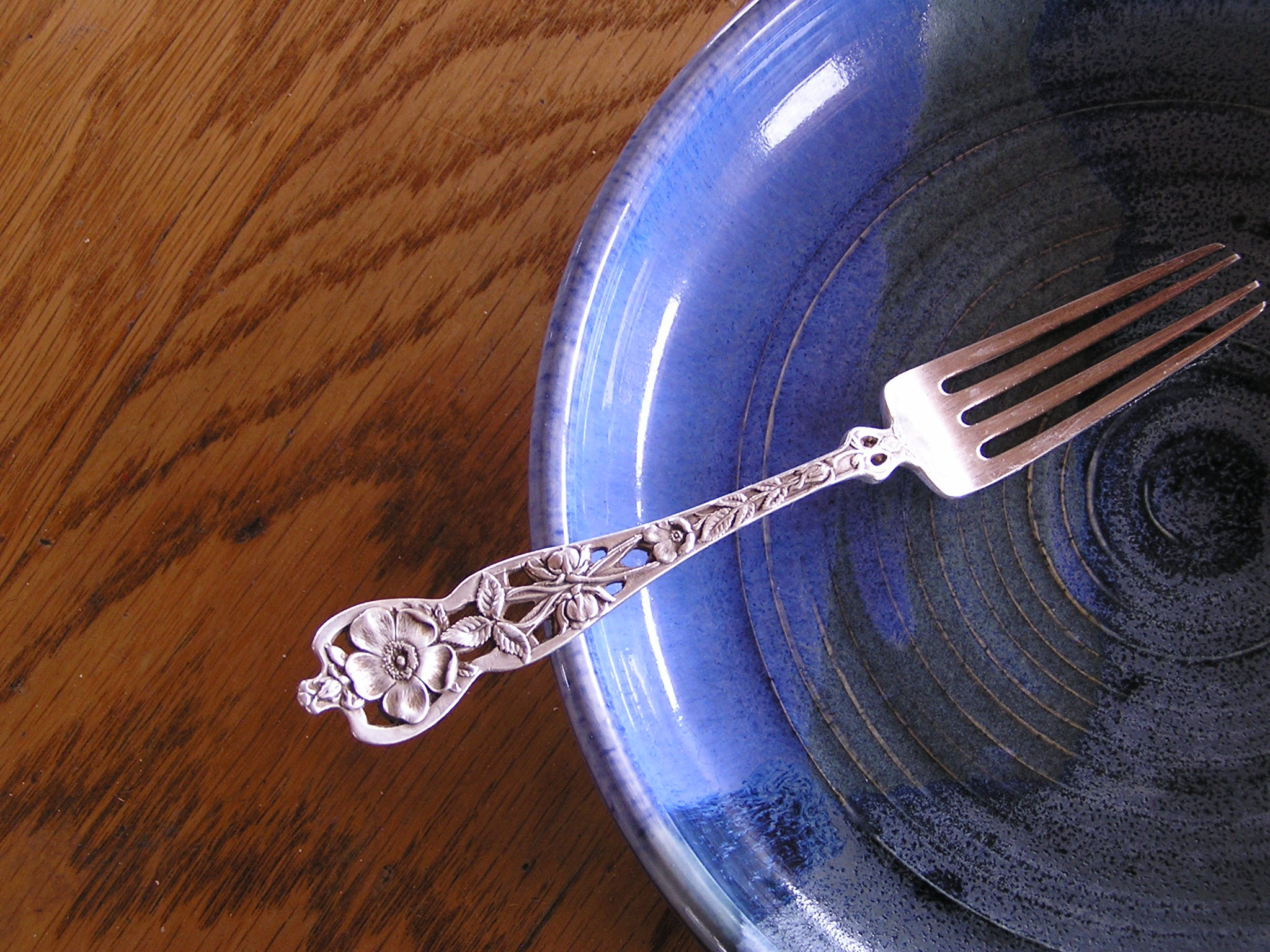 How does she do it? I studied my college roommate, Trish, who was seated across from me in the cafeteria. I knew how to eat fast. Really fast. In fact that was the only way I knew how to eat. Trish, on the other hand, ate slow. Really slow. I had begun to think there could be some value in slowing down. At least I wouldn’t have to wait around with an empty plate for eons while Trish finished. So I resolved to learn how Trish did it. I studied her every move. A ha, her method: she put down her fork in between every single bite. I was accustomed to keeping my tool in hand for quick service so this was a new experiment. I began to put my fork down between each bite and sure enough I did slow down.
Since that time I have learned that when we eat with slow, relaxed, attention we actually get more nutrients out of our food.
A Little Nervous Science.
Our sympathetic nervous action system helps us handle the important events of life. It gears us up for action. It’s known for its fight, flight, tend and befriend skills.
Our parasympathetic at ease system helps us handle every-day life. It dials us down to be at ease. It is known for its rest and digest skills.
Last summer when I was on a hike a large snake (who should have his photo here, but can I locate it? No.) appeared in my path. Before I could identify what kind of snake it was my action system had already increased my heart rate, poured adrenaline into my blood diverting it to large muscles, and shut down unnecessary systems like digestion. When I realized that this was a bull snake sunning himself, my at ease system came back on producing the opposite effects.
This works for us in the real world.
But here’s the problem. Our body does not know the difference between an actual emergency and an imagined emergency.
Just imaging my story can turn the action system on.
Think about what this means for eating and watching a movie or the news. Seeing the events triggers our action system and shuts down our digestive system. The food we consume never gets fully assimilated. Studies have shown, for example, that some minerals just pass on through never entering the blood stream.
Worry is another way to turn on the action system.
Our project for the next two weeks is to eat with the at ease system turned on (for at least 3 bites).
Better a dry morsel with quiet then a house full of feasting with strife. (Proverbs 17:1)
I really like eating. So it is crazy that I don’t take more time to enjoy it. Marc David in his book The Slow Down Diet introduced me to Vitamin P – pleasure.
Digestion begins in the brain with our Cephalic Phase Digestive Response. This is where we register the taste, aroma, sight, satisfaction and over all pleasure of a meal.
When we eat with pleasure we get the most nutrition food has to offer. When we eat mindlessly or stressed we reduce the calorie burning power and assimilation of specific nutrients by 20-80%.
Consider this study: Thai subjects are given two versions of a favorite Thai meal.
Version 1: Standard full course Thai meal.
Version 2: Same meal put through a blender and turned to a thick paste.
Subjects absorbed 70% less iron from the blended meal as the standard meal.
Both meals contained the same amount of iron. The missing ingredient from the blended meal was P – pleasure.
Sculpting Project: Three Bites of Vitamin P: Week 1
Each day get as much pleasure as possible out of 3 bites of food.
Post us what you ate.
Fun 10 minute Ted Talk on eating: https://www.youtube.com/watch?v=qkoTg9a3lnQ
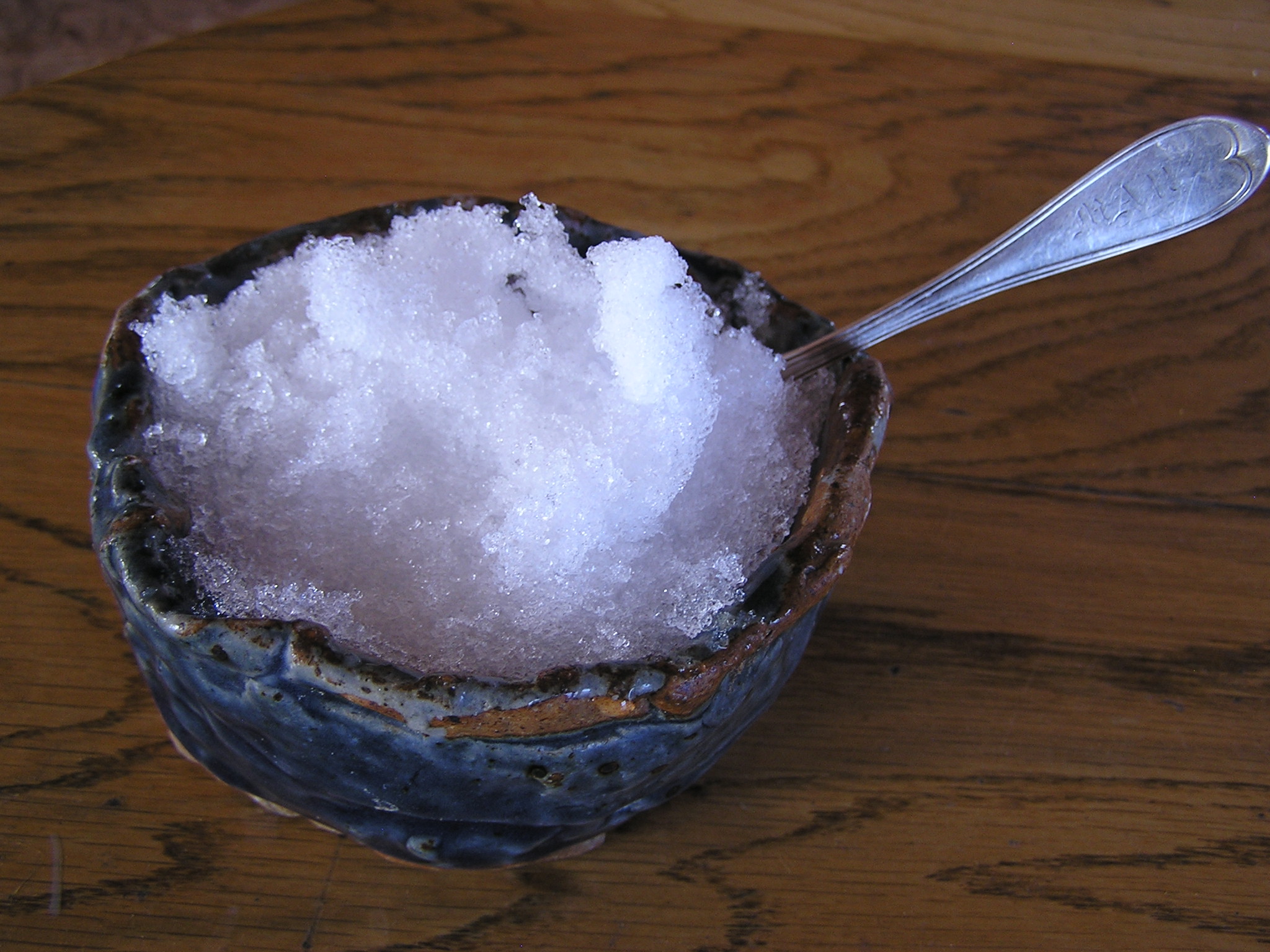 Today I am snowed in so I take 3 bites of pleasure with snow ice cream.
Ingredients:
Fresh snow
Milk
Sweetener (sugar or syrup)
Extracts Vanilla and rout-beer is my current favorite
Mix together and eat with pleasure.
 soulsculpting